
Fleur-de-Lis
Tummy Tuck
in Scottsdale, AZ

A fleur-de-lis tummy tuck is designed for patients with significant excess skin in both vertical and horizontal directions – concerns that a traditional tummy tuck may not fully address. Dr. Joseph Berardi tailors every procedure to your unique anatomy, medical history, and aesthetic goals, creating a surgical plan focused on achieving a smoother abdominal contour.
Woman's torso showing a sculpted, flat abdomen after Fleur de Lis tummy tuck procedure
Abdomen marked with surgical lines indicating fleur de lis tummy tuck incision pattern

What Is a Fleur-de-Lis Tummy Tuck?

A fleur-de-lis tummy tuck is an advanced procedure that uses two incisions instead of one: the traditional horizontal incision placed low across the abdomen (typically hip to hip), plus a vertical incision running up the midline from the pubic area toward the lower chest. Together they form an inverted "T" – the shape that gives the technique its name.

During surgery, the abdominal wall is also addressed: separated muscles are repaired, excess fat is contoured, and remaining skin is redraped over a flatter foundation.

Preparing for Fleur-de-Lis Surgery

Preparation begins with a consultation with Dr. Berardi to determine the appropriate treatment. He reviews your medical history, weight-loss history, prior surgeries, and goals; examines your abdominal wall and skin quality; photographs the treatment area for planning; and explains exactly where incisions will fall.
  • Complete nicotine cessation, in accordance with our nicotine policy.
  • Medical clearance and lab work as directed, including a health and physical appointment.
  • Adjusting medications and supplements that increase bleeding risk.
  • Stabilizing your weight and optimizing nutrition, particularly protein intake.
  • Arranging support at home for at least the first week, along with time off work.
  • Preparing your recovery space – loose clothing, easy meals, pillows, and a recliner or supported bed setup.
Berardi Aesthetics & Plastic Surgery reception area with curved desk, pendant lighting, and logo on frosted glass entry door

The Fleur-de-Lis Procedure

Before surgery begins, Dr. Berardi marks the incision pattern while you are standing, since gravity affects how loose skin hangs. The procedure is performed under general anesthesia, putting you fully asleep, to ensure maximum comfort.
Two incisions are then created: a horizontal incision low across the abdomen, positioned to sit beneath most underwear and swimwear, and a vertical incision running from the pubic area up the midline toward the bottom of the breastbone, with its upper extent determined by how much horizontal excess must be removed.
The skin and fat layer is lifted away from the abdominal wall to expose the muscles. Dr. Berardi repairs any separation with internal sutures, tightening the wall from the pubic bone toward the ribcage.
Excess skin and fat are then removed in both directions – downward along the horizontal incision and inward along the vertical one. Liposuction may refine the flanks and blend transitions. Remaining tissue is advanced and drawn together so it lies smoothly and under even tension.
Because so much tissue is removed, the belly button is typically detached and repositioned to a natural-looking location on the newly flattened abdomen. Careful attention to navel shape and placement separates a natural result from an obviously operated one.
Incisions are closed in multiple layers to reduce surface tension. Drains may be placed to prevent fluid accumulation, and dressings plus a compression garment are applied before you wake.
Before &
After Gallery
line
View Our Results

Recovery After Surgery

Recovery is a real commitment, and it is important to plan for it honestly. Resting the body during the first week is essential. Expect swelling, tightness, bruising, and a pulled sensation – most patients walk slightly bent forward for the first several days, with discomfort managed by prescribed medication.
You will wear a compression garment as directed to control swelling and help skin adhere to underlying tissue. Short, frequent walks begin almost immediately, while lifting, bending, and core engagement are restricted. Drains, if placed, are removed at a follow-up visit once output decreases – usually within a week or two. Dr. Berardi sees surgical patients about once weekly during the six-week recovery period, advising on activity at each visit.
  • Week 1: Body rest is the priority. Limited walking only, garment worn continuously, discomfort managed with prescribed medication.
  • Weeks 2–3: Mobility improves noticeably. Many patients transition off prescription pain medication and return to desk-based work.
  • Weeks 4–6: Swelling subsides, and standing posture returns to normal. Light activity is gradually reintroduced under Dr. Berardi’s guidance. A general recovery period of approximately six weeks applies to most surgical procedures at our practice.
  • Months 2–3: Most patients resume full exercise, including core work, once cleared. Contour becomes considerably more defined.
  • Months 6–12: Residual swelling resolves and final shape emerges. Scars continue maturing throughout the first year and beyond.
The T-shaped scar is the honest trade-off of this technique, and we address it directly. Scars are typically firm, pink, and raised in the early months, then gradually soften and fade.Steps that meaningfully improve the outcome:
  • Following all incision care instructions precisely.
  • Avoiding tension on healing tissue.
  • Wearing your compression garment as directed.
  • Protecting scars from sun exposure.
  • Beginning scar therapy – including silicone sheets or gels – when Dr. Berardi recommends it.
    Our practice offers dedicated scar therapy, and our medical spa provides treatments that further refine skin texture and appearance once healing is complete.
Woman displaying toned abdomen and torso after fleur de lis tummy tuck procedure

Expected Results

Change is often obvious within weeks, but the refined contour continues improving for 6-12 months as swelling resolves and tissues settle. Patients can expect a dramatically recontoured, firmer, smoother abdomen with a tighter waistline.

Skin and fat removed during surgery are gone permanently, and muscle repair is designed to be long-lasting. Results are maintained with stable weight, consistent activity, and good nutrition; significant weight gain or future pregnancy can compromise the outcome.

Before-and-after galleries are available so you can see real surgical outcomes from our practice.

Ideal Candidates for
the Procedure

The ideal candidate has excess abdominal skin extending horizontally as well as vertically, has reached a stable weight, and accepts the vertical scar in exchange for a significantly improved contour.

  • Weight stability for at least several months, so results are not undermined by further fluctuation.
  • Good general health and the ability to safely undergo general anesthesia.
  • Not smoking – our practice maintains a nicotine policy, as nicotine compromises healing in skin-flap surgery.
  • Completed childbearing, since future pregnancy can stretch repaired muscles.
  • Realistic expectations about scarring, recovery length, and what surgery can and cannot accomplish.

Candidacy can only be determined after an in-person evaluation with Dr. Berardi.
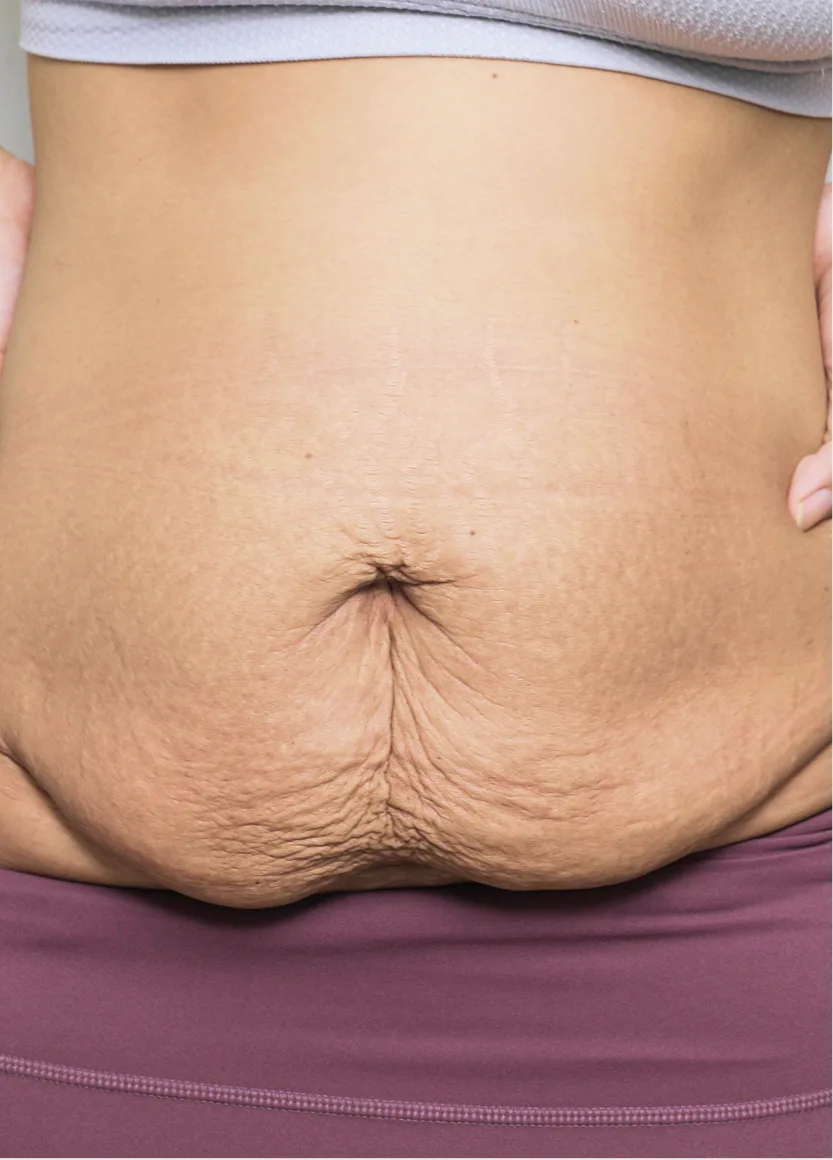
After losing 75, 100, or 200 pounds – through bariatric surgery, medical weight loss, or lifestyle change – skin stretched for years rarely retracts on its own. What remains is an apron of loose tissue that hangs over the waistband, folds at the sides, and creates a wide, blocky midsection.

A standard tummy tuck can flatten the front but leaves the width. The vertical component of the fleur-de-lis narrows the torso and restores a waist. Dr. Berardi offers dedicated post-bariatric body contouring to smooth these new contours. Removing the tissue also resolves practical frustrations – chafing, trapped moisture, hygiene difficulty, and unpredictable clothing fit.
Pregnancy separates the rectus muscles down the midline – diastasis recti – while the skin above stretches. The resulting lower-abdominal bulge is structural, not a matter of muscular weakness, and core work cannot flatten it.

The fleur-de-lis becomes relevant for women who carried multiples, gained substantial pregnancy weight, went through repeated pregnancies, or lost significant weight postpartum, leaving horizontal excess in addition to vertical laxity. Dr. Berardi always recommends the least aggressive technique capable of achieving your goals.
Patient's abdomen showing excess skin and laxity before Fleur de Lis tummy tuck procedure

Benefits of the Fleur-de-Lis Technique

Patients frequently report:

  • Clothing that fits properly for the first time in years, without accommodating a hanging fold.
  • Relief from rashes, chafing, and moisture-related irritation in abdominal creases.
  • Greater ease and comfort during exercise and daily movement.
  • Improved core stability from a repaired abdominal wall.
  • Long-lasting results, provided weight remains stable.
  • A sense of completion after a long weight-loss journey.

Cost of a Fleur-de-Lis Tummy Tuck in Scottsdale, AZ

A fleur-de-lis tummy tuck in Scottsdale generally ranges from $10,000 to $25,000, with most cases falling in the $12,000–$20,000 range, reflecting the extended operative time and complexity compared with a standard abdominoplasty.
Pricing varies based on:
  • Your anatomy and the extent of skin and fat removal.
  • Muscle repair required.
  • Whether liposuction or additional procedures are combined.
  • Anesthesia and surgical facility fees.
Request your personalized quote: 480-397-0711

Why Choose Berardi
Aesthetics & Plastic Surgery

Complex body contouring after major weight loss requires a surgeon who does this work regularly and a practice built around long-term relationships.
  • Post-weight-loss contouring is a defined focus. Dr. Joseph Berardi offers dedicated techniques to smooth new contours and tighten areas left behind by significant weight loss – the exact population this technique serves.
  • Surgical precision with an artistic eye. Every plan is built around natural-looking results that align with your aesthetic goals.
  • Consultations are with the surgeon. Dr. Berardi personally conducts consultations.
  • Weekly follow-up during recovery. Dr. Berardi visits with surgical patients about once a week throughout recovery, guiding activity progression individually.
  • Comprehensive care under one roof. Our surgery practice and full medical spa offer scar therapy, Morpheus8, and skin treatments to refine your results after healing.
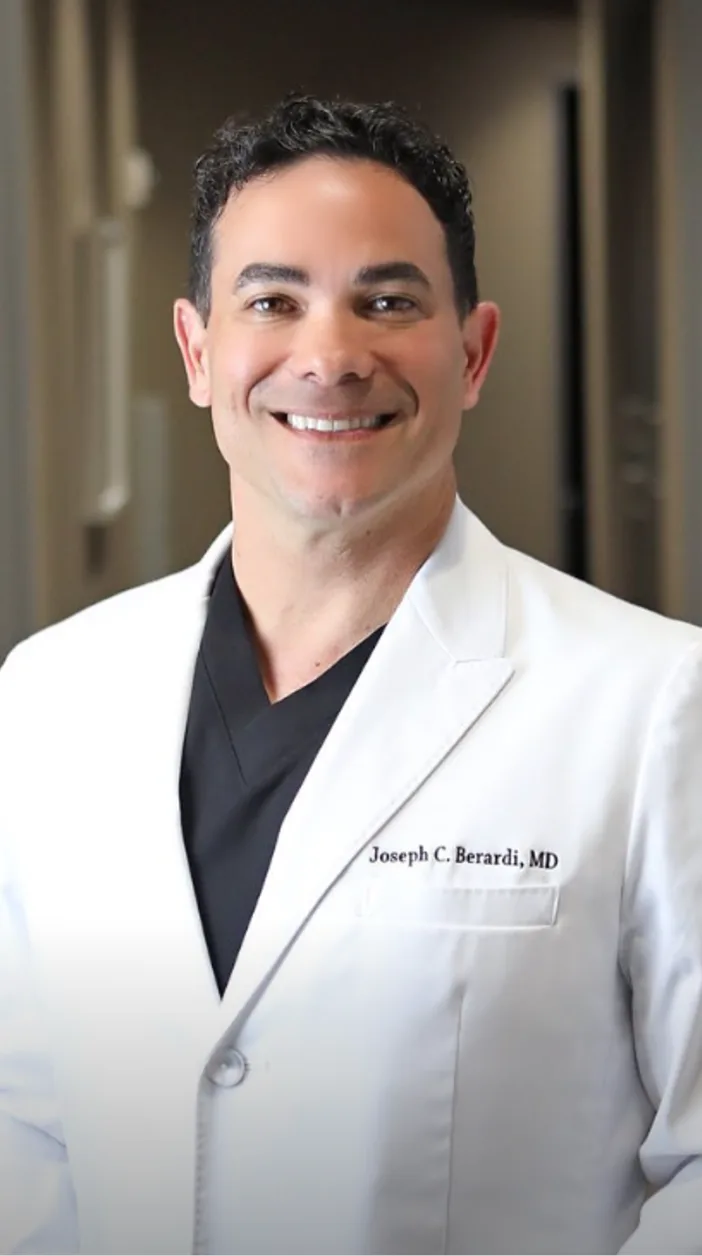
Joseph Berardi, MD, plastic surgeon, smiling in white coat and black shirt

Frequently Asked Questions (FAQs)

When excess skin extends horizontally as well as vertically – most often after major weight loss – a single downward pull cannot remove it all. The vertical incision narrows the abdomen and eliminates side-to-side redundancy. Dr. Berardi will tell you honestly whether a standard tummy tuck would achieve your goals.
Duration varies with the extent of correction needed, but it typically takes several hours. Dr. Berardi will provide a more precise estimate during your consultation.
It is a visible midline scar that fades and softens over the first year but does not disappear. Most patients who need this technique consider it a worthwhile exchange for the contour improvement. Careful incision care, sun protection, and scar therapy all help optimize appearance.
Drains are typically placed to remove excess fluid and reduce swelling. They are usually removed within a week or two, once fluid output decreases.
Plan on approximately six weeks for general recovery, with complete rest during the first week. Many patients return to desk work in two to three weeks. Strenuous exercise and heavy lifting should be avoided for at least six weeks, with full exercise typically resuming around two to three months, depending on Dr. Berardi’s clearance.
Often, yes. Liposuction is frequently included, and some patients combine abdominal contouring with breast surgery, arm lift, or thigh lift. Combining versus staging depends on safety, operative time, and your goals.
You should be at a stable weight before surgery. Continued weight loss afterward can create new laxity, and weight gain can compromise your result.

Take the Next Step Toward Your New Contour

If years of loose skin have kept you from the shape your effort deserves, a consultation is the place to find out what is possible.
logo 55
Confidence is crafted with care.