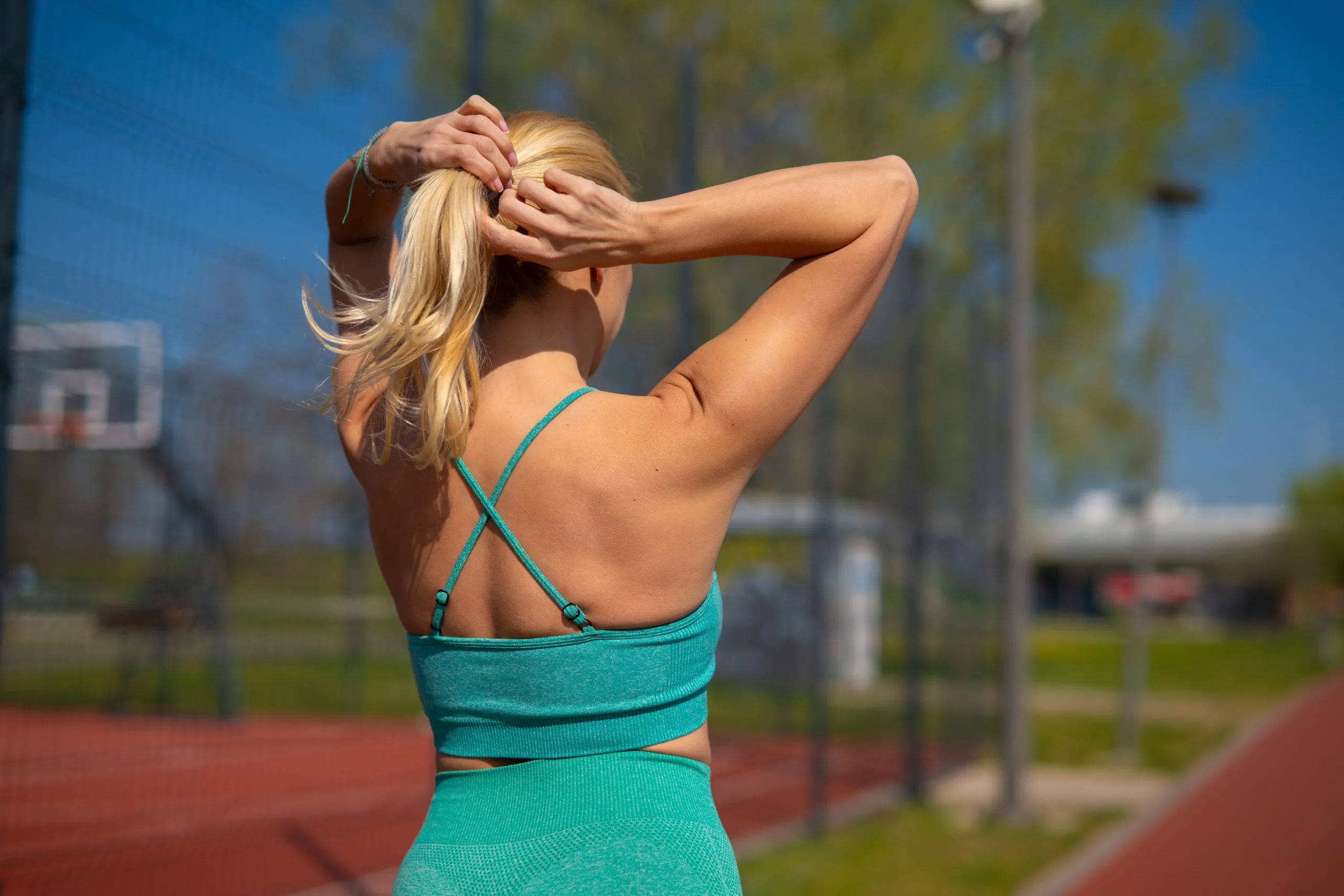
After significant weight loss, your body can look dramatically different – but some areas may not change quite as expected. One common concern is the “bra roll,” a fold or bulge of excess fat, loose skin, or both that appears around the bra line, upper back, or underarm area. While often frustrating, bra rolls after weight loss are a normal result of changes in fat distribution, skin elasticity, and the body’s ability to retract after being stretched.
Understanding why they happen – and whether the tissue is primarily fat, loose skin, or a combination – is the first step toward determining what options may help improve the area.
Major weight loss is a monumental accomplishment, yet the mid-back and side-chest often do not match the rest of the new frame. A bra roll is the horizontal bulge under or just above the bra band, wrapping from the side of the breast toward the armpit and upper back. It can be mostly fat, mostly loose skin, or a mix of both – after weight loss, the mix usually includes more skin than people expect.
“Axillary” refers to the axilla, or armpit. An axillary back roll is the fold that begins at the back part of the armpit and extends horizontally across the upper back, which is often a continuation of loose skin and fat from the upper arms.
Raise your arms in a mirror: if the bulge stays on the back and side chest, it is an axillary back roll; if a sail of skin hangs from the arm, that is an arm-skin issue
Many people have both; the tissues are neighbors
Check with and without a bra, standing, arms at your sides, and arms slightly forward, as if typing
Bra roll after weight loss is a mechanical and biological reality of skin physiology, not a failed diet or workout plan. Weight loss reduces fat-cell size; it does not always reduce the number of fat cells in a pocket, and it does not automatically shrink skin.
Several causes often stack rather than act alone:
Leftover fat: Fat cells in the upper back and lateral chest can stay stubborn; even a thin pad under the bra band can look like a large ridge
Loose skin: When the skin envelope is bigger than the body inside it, extra tissue buckles into horizontal folds along the bra line
Loss of skin elasticity: Collagen gives skin strength, and elastin gives recoil; overstretch the tissue, and it behaves like a rubber band that will not snap back
Significant weight fluctuations: Laxity is often proportional to how much weight was lost and how long someone was overweight; rapid or massive loss after bariatric surgery gives skin little time to contract
Genetics and aging: Some people are predisposed to less elastic skin or back and axillary fat storage; collagen and elastin production also decline with age
Sun, smoking, and large weight swings: Sun on the upper back, plus a smoking history, can leave skin crepey or thin on top of the roll
The bra itself: A tight band does not create fat; it compresses and rearranges what is there, which is more obvious after surrounding fullness is gone
Even rigorous exercise and strict diets often fail here because the problem is twofold, and workouts can address only one part of it.
You cannot “spot reduce” fat with sit-ups, rows, or “back fat” workouts
Strengthening the muscles will not necessarily burn the subcutaneous fat sitting on top of them
No amount of lifting or toning can tighten or remove excess, inelastic skin once elastic fibers are damaged
Some people have fibrous fat on the upper back – denser tissue that is less likely to shrink evenly
A thin skin layer plus constant shoulder motion can hold a crease the way folded paper holds a bend
This is why many of our patients consider back liposuction, BodyTite, Evolve body contouring, or an arm lift as the next steps.
Treatment depends on what the roll is made of. Fat-dominant rolls respond to fat removal and, in some cases, energy-based tightening; skin-dominant rolls need skin removed or significantly tightened; mixed rolls, which are common after weight loss, often require a combined plan.
At Berardi Aesthetics & Plastic Surgery, options that may apply include:
Liposuction
Arm lift and arm liposuction
BodyTite
Evolve body contouring
Broader post-weight-loss surgery
The point of an initial consultation with Dr. Joseph Berardi is to match the procedure to your needs.
The ideal time is after you have reached a stable goal weight and maintained it for several months, so results last and your body is ready for a procedure. Consider a visit when the roll bothers you in clothing, when skin folds irritate, or when the fold is clearly not fading – you do not need to have “finished” every other body goal first.
During a private consultation with Dr. Berardi, he will personally evaluate your concerns. This meeting typically includes:
A thorough discussion of your goals and what you hope to achieve
A physical exam of skin quality, degree of laxity, and amount of excess fat
A look at the upper back, arms, and how those areas relate to the breasts and midsection
A detailed explanation of options, such as liposuction, extended arm lift, other body lift procedures, or energy-based tightening
A personalized surgical plan tailored to your anatomy and desired outcome
Bring a list of what you have already tried, including training, weight-loss history, and bras that help or fail. Mention prior liposuction or body surgery, because old contouring changes the plan. You may also use a quick call, arranged at a convenient time, if you have a focused question before you come in.
Successfully losing a significant amount of weight is a life-changing achievement, and your body should be a source of pride, not frustration. Bra rolls are a common, expected outcome of stretch, genetics, skin recoil, and garment pressure. Proven options at Berardi Aesthetics & Plastic Surgery range from liposuction and BodyTite to arm lift and full post-weight-loss surgery, chosen after Dr. Berardi examines how your fold is built. A consultation is the clear next step toward a smooth, firm, contoured back that reflects the changes you have already made.
About the Author
Dr. Joseph Berardi
September 9, 2026