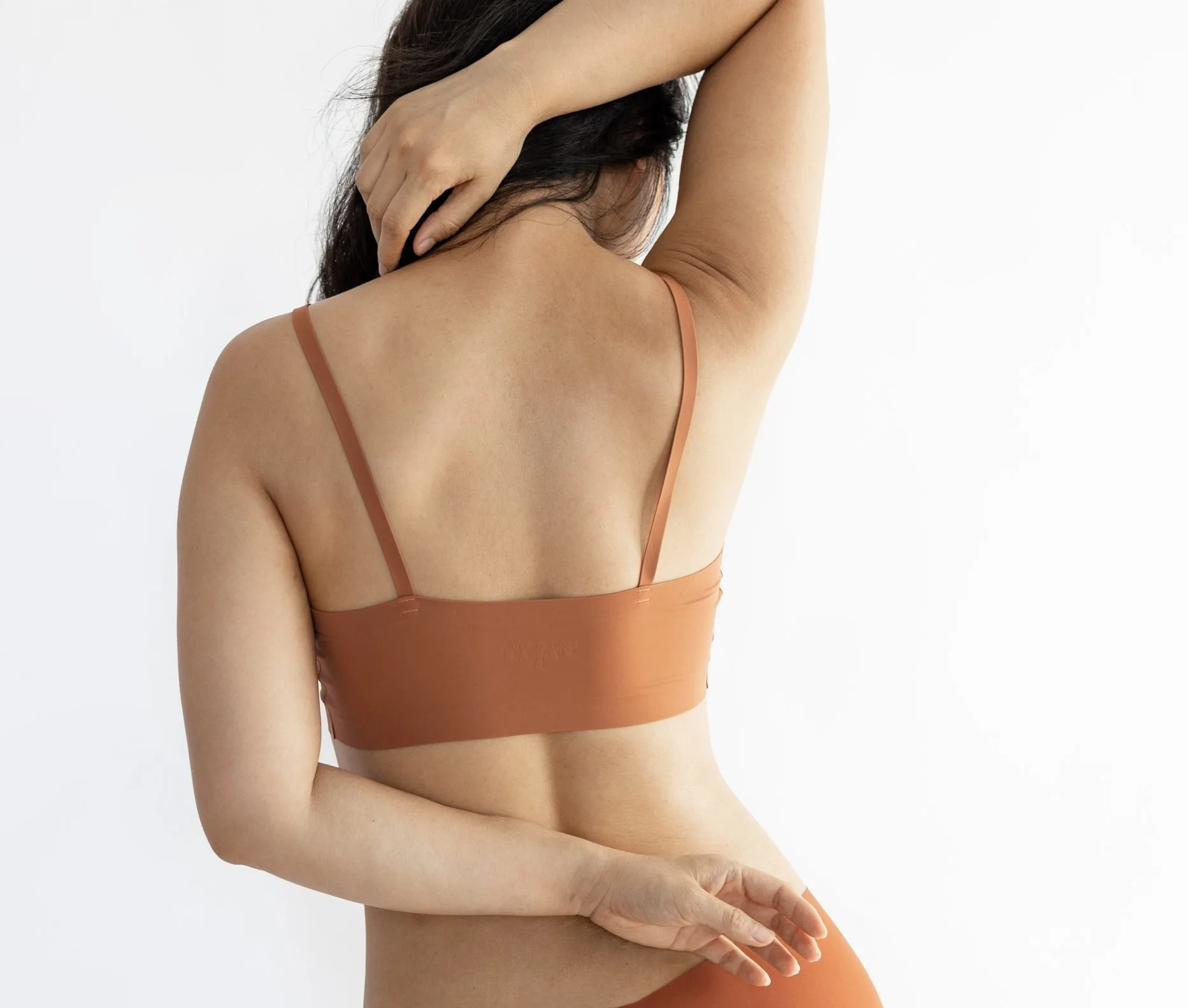
That little bulge over your bra strap can be frustrating, especially under fitted clothing or in photos. Known as “bra roll fat” or “back fat,” it’s a common concern at Berardi Aesthetics & Plastic Surgery – and one that can be treated. Depending on your goals, options range from non-surgical body contouring to targeted liposuction or breast procedures when bra fit is part of the problem.
Bra roll fat isn’t a sign that you’re doing anything wrong. It’s simply where your body tends to store fat, and genetics plays a bigger role here than diet or exercise ever will. The band of your bra sits right along the bra line on your back and sides, an area with its own fat cells that respond to hormones, age, and weight changes independently of the rest of your body. That’s why you can be at a healthy weight and still have this stubborn pocket of fullness.
If your skin has good elasticity and you’re mainly dealing with a modest amount of stubborn fat, non-surgical body contouring can make a noticeable difference without downtime. At our Scottsdale practice, we often recommend Evolve body contouring, which uses radiofrequency energy to gently heat the tissue, reduce fat, and tighten skin over a series of sessions. It’s a comfortable, in-office treatment – most patients read, scroll their phones, or simply relax during the 30-minute sessions.
These treatments work gradually. You won’t see overnight results, but many patients notice a smoother back line after their treatment series is complete, with results that continue to improve for weeks afterward as the body processes the treated fat. This route tends to suit people who are close to their goal already and want refinement rather than a dramatic change.
For fat that hasn’t budged despite a healthy lifestyle, liposuction remains the most reliable way to remove it permanently. Fat cells that are suctioned out don’t come back, which is part of why this procedure has stayed a patient favorite for decades.
When it comes to bra roll fat specifically, we typically talk with patients about a few approaches:
Back liposuction targets the bra line directly, smoothing the area where the band sits.
Flank liposuction addresses the sides of the torso, which often blend into bra roll fullness.
Lipo 360 treats the entire midsection – front, sides, and back – for a more complete, balanced contour rather than one isolated spot.
Fat removal alone doesn’t always solve the problem, especially if your skin has lost some of its natural elasticity due to age, pregnancy, or a significant weight change. In these cases, we may talk about combining liposuction with a skin-tightening treatment like BodyTite, which uses radiofrequency energy during the procedure itself to encourage the skin to contract as fat is removed. This gives patients with mild to moderate skin laxity a more contoured result than liposuction alone could achieve.
Here’s something patients are often surprised to learn: bra roll fat can be worsened, or even caused, by an ill-fitting bra that’s compensating for breast size or position. If your breasts have changed shape after pregnancy, weight loss, or simply over time, the band may be working overtime to provide support, digging in and creating a fuller appearance along your back.
In these situations, a breast lift or breast reduction can improve bra fit dramatically, easing pressure on the band and, in turn, softening the appearance of the roll itself.
There’s no single “best” treatment for bra roll fat, because no two bodies are exactly alike. What matters most is an honest conversation about what you’re dealing with: How much of this is fat versus skin? Is your bra actually fitting you well? Are you looking for subtle refinement or a more complete transformation?
At Berardi Aesthetics & Plastic Surgery, Dr. Berardi takes the time to walk through these questions. You deserve a plan built around your body and your comfort level, not a one-size-fits-all recommendation.
If bra roll fat has been bothering you, reach out to schedule a consultation or call us at (480) 397-0711 to discuss which option makes the most sense for you.
About the Author
Dr. Joseph Berardi
September 8, 2026